
Posted by Dee Cee Labs on Aug 25th 2026
Supporting Healthy Cellular Communication with Essential Fatty Acids
Healthy communication between cells is essential for proper function throughout the body. Every cell is surrounded by a membrane that helps control how nutrients enter, how waste leaves, and how signals are received and transmitted. Essential fatty acids play an important role in maintaining the structure and flexibility of these membranes.
Because the body cannot produce certain essential fatty acids on its own, they must be obtained through food or supplementation.
WHY CELL MEMBRANES MATTER
Cell membranes are made largely from phospholipids and fatty acids. Their structure affects how efficiently receptors, transport proteins, and signaling molecules can function.
Healthy, flexible membranes help cells respond appropriately to hormones, neurotransmitters, and other chemical signals. This is especially important in the nervous system, where rapid and accurate communication is necessary for movement, sensation, and coordination.
OMEGA 3 FATTY ACIDS AND CELLULAR FUNCTION
Omega 3 fatty acids, particularly EPA and DHA, are important components of cell membranes. DHA is highly concentrated in brain and nerve tissue, while both EPA and DHA help support healthy inflammatory balance and normal membrane function.
By contributing to membrane fluidity, omega 3 fatty acids help support the cellular environment needed for efficient communication and signaling.
SUPPORTING MUSCLES AND NERVES
Muscle and nerve cells depend on healthy membranes to maintain the movement of minerals such as sodium, potassium, and calcium. These minerals help generate the electrical signals involved in nerve impulses and muscle contraction.
Supporting cell membrane health with essential fatty acids can therefore contribute to normal nervous system function, muscle performance, and communication between nerves and muscles.
BUILDING HEALTHY CELLS THROUGH NUTRITION
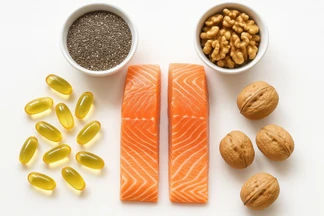
Fatty fish such as salmon, sardines, and mackerel are excellent sources of EPA and DHA. Nuts, seeds, and plant oils can also provide essential fatty acids, including alpha-linolenic acid.
For individuals who do not regularly consume these foods, a quality omega 3 supplement may help support adequate intake.
Healthy cellular communication begins with healthy cell membranes. By providing the body with essential fatty acids, individuals can support nervous system function, muscle activity, inflammatory balance, and overall cellular wellness.